Aeon
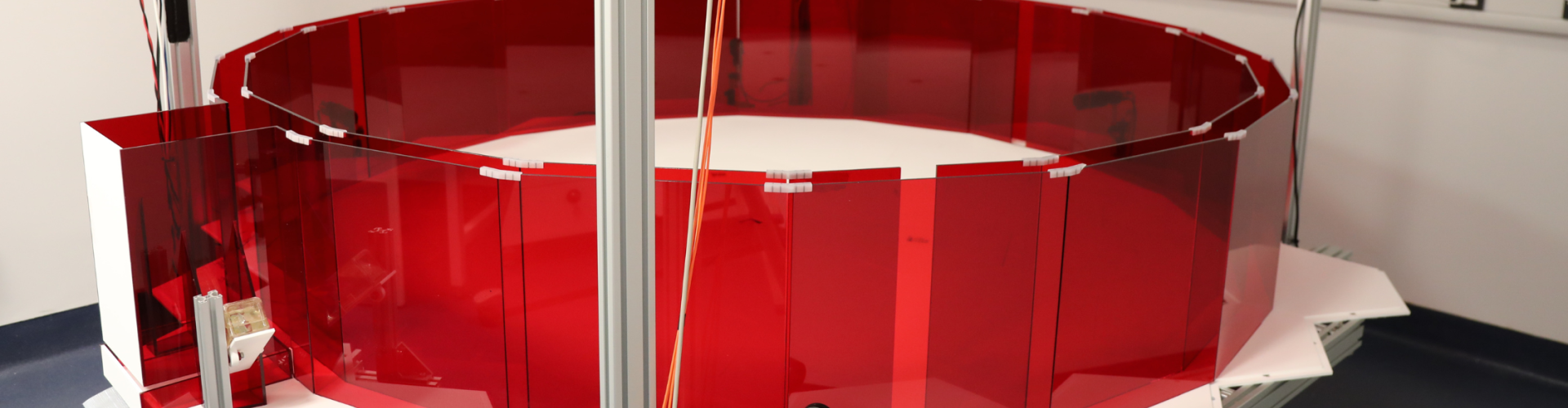
Many animal behaviours - foraging, learning, navigation, decision making, social interaction - unfold over timescales that span seconds to weeks. Aeon is an open-source, modular platform developed to support researchers to study the brain during such natural behaviour. It enables continuous, long-term recording of behaviour and neural activity in freely moving animals living within large, customisable habitats – with sub-millisecond precision up to timescales of weeks or months.
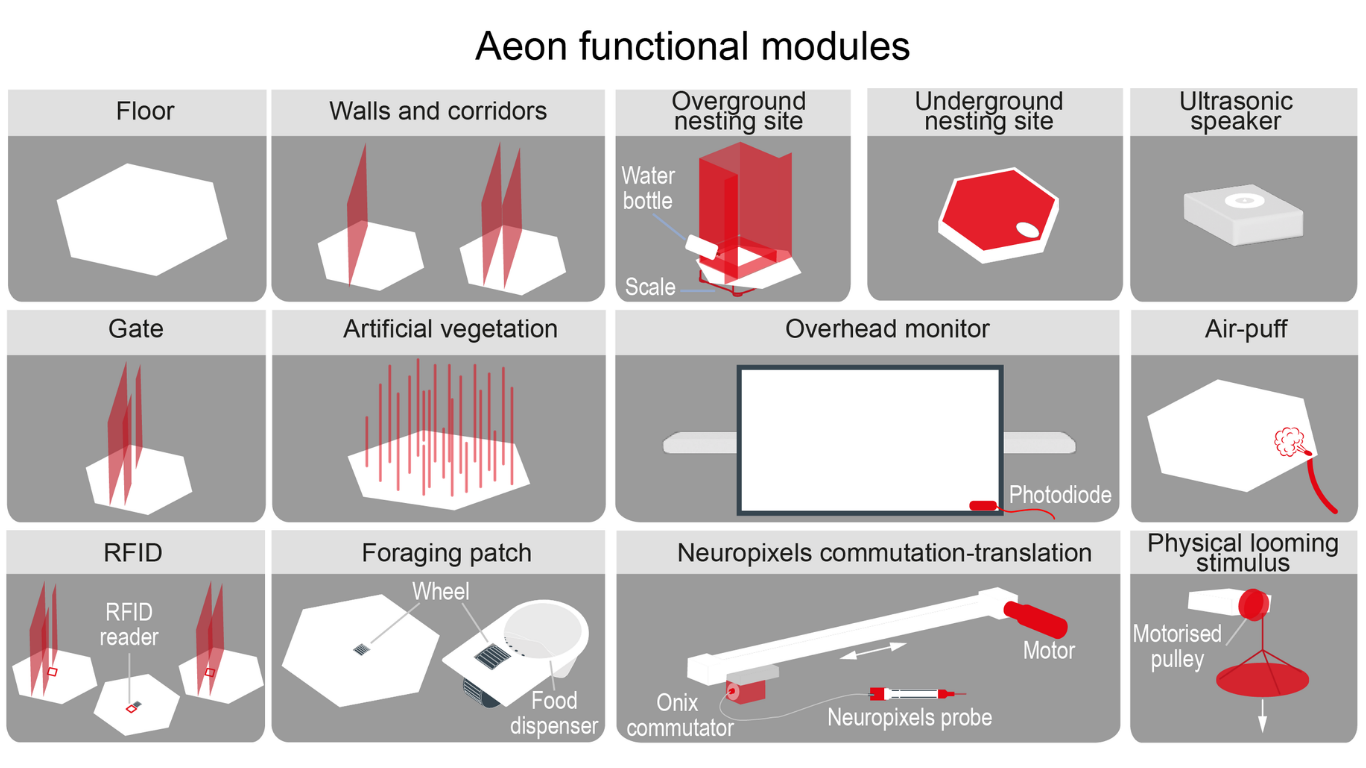
The Aeon habitat can be configured with combinations of interactive and non-interactive modules. Modules include, but are not limited to, foraging patches, nesting areas, high-speed cameras, RFID readers, weighing scales, computer monitors, speakers and microphones. Across this setup, Aeon continuously tracks animal position, pose, and identity, enabling multidimensional quantification of behavioural dynamics, alongside simultaneous neural recording. This allows researchers to address neuroscientific questions through the lens of naturalistic behaviours, while retaining the level of experimental control typically associated with reductionist laboratory studies.
Eighteen research projects within and outside SWC are currently using Aeon. Researchers interested in using Aeon should contact Dr Dario Campagner, Aeon Group Leader, and Senior Research Fellow at SWC and GCNU.
Who can use Aeon?
Aeon is relevant to any researcher interested in studying behaviour and neural activity over naturalistic timescales. Whether you are a PI thinking about new experimental directions, or an early-career researcher or PhD student exploring the tools available at SWC, Aeon may open up approaches that standard short-task paradigms cannot.
The platform is designed to support new applications. If you have an idea for how Aeon could be applied to your research question, the team wants to hear from you.
Contact
To discuss how Aeon might fit your research, or to explore potential collaboration, contact Dr Dario Campagner, Aeon Group Leader, and Senior Research Fellow at SWC and GCNU.
Full documentation, including technical details, hardware specifications, and guides for getting started, is available at the Aeon project website: aeon.swc.ucl.ac.uk
Aeon was developed by researchers at the Sainsbury Wellcome Centre, the Gatsby Computational Neuroscience Unit, NeuroGEARS and DataJoint.
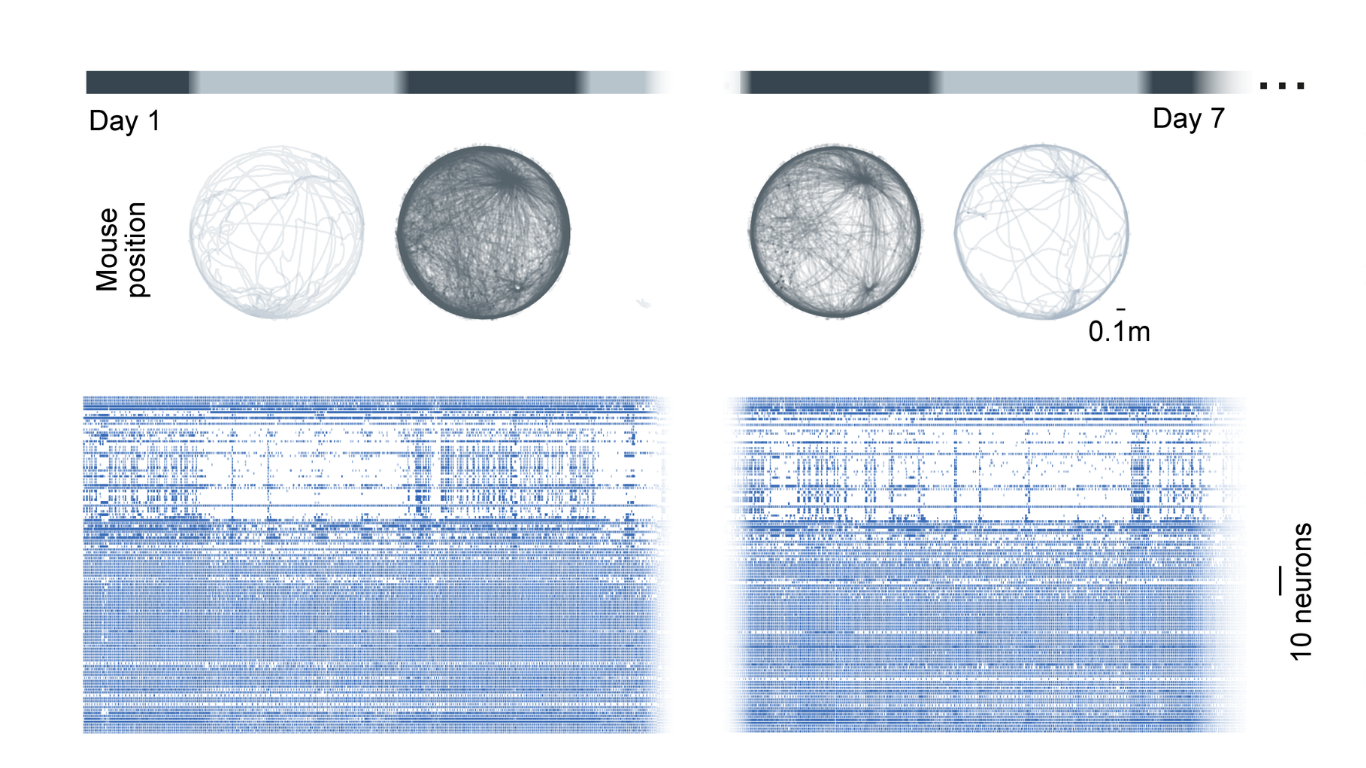
Example of a continuous week-long experiment with animal exploration trajectories (top) and single-unit neural activity (bottom) recorded using Neuropixels probes.
Data
Aeon produces a uniquely rich type of data. Because experiments run continuously over multiple weeks and record across multiple streams in parallel, from video and pose tracking to weight and foraging activity, the resulting datasets capture the fine-grained structure of natural behaviour in a way that short, session-based recordings cannot.
We believe this data is a resource for the whole field, not just our own labs, which is why full experimental datasets, from raw acquisition through to processed outputs, are openly available. As new Aeon-based projects come online, we will continue to expand what is shared, so the resource grows for researchers everywhere.
Examples of projects employing Aeon at SWC
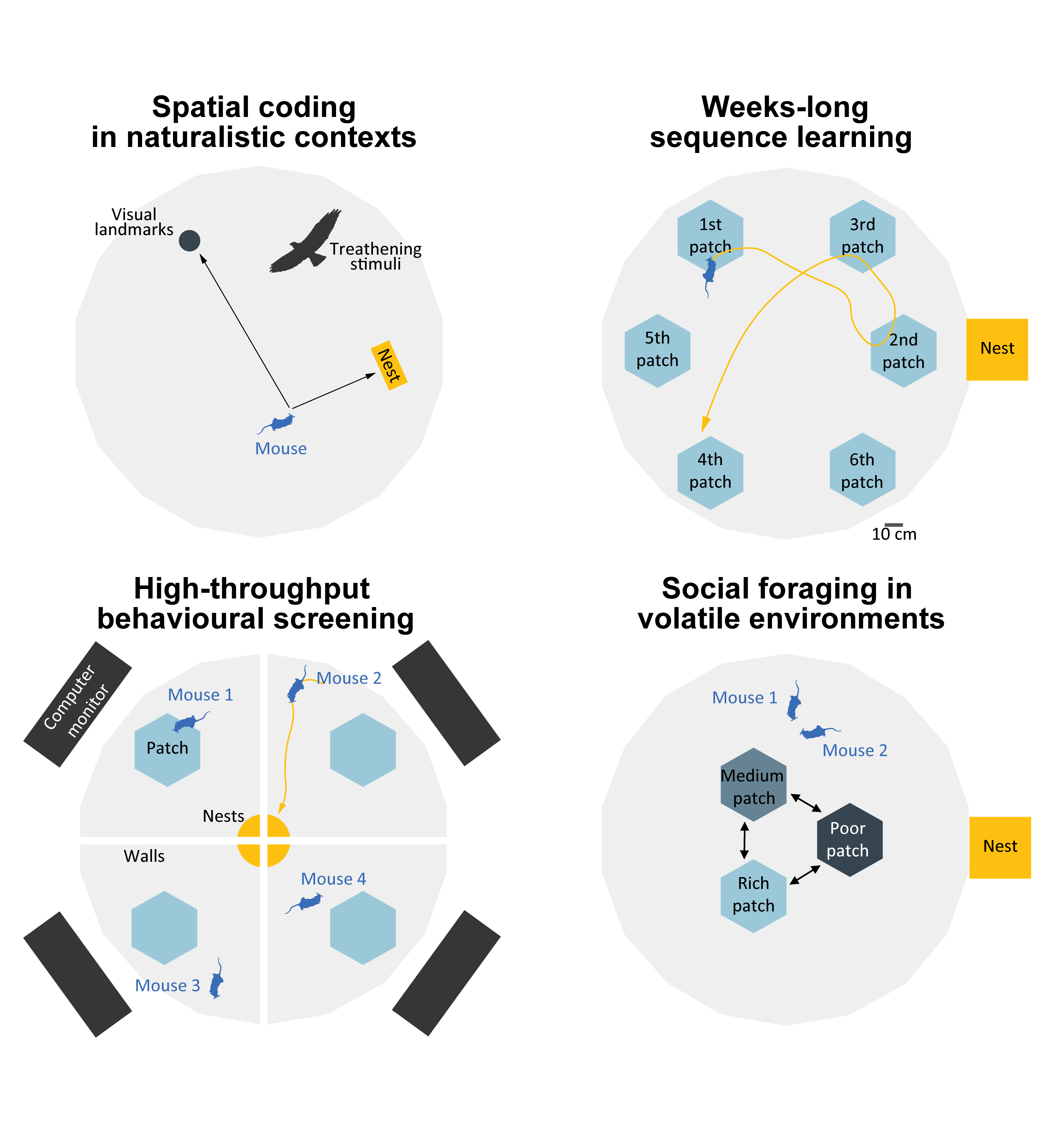
The Aeon platform is currently used to support a broad range of research projects. The examples below illustrate how different studies exploit distinct core capabilities of Aeon's modular hardware and software architecture. These include: (i) studying the neural basis of spatial navigation during naturalistic behaviour in large-scale environments; (ii) continuously recording the same neurons over weeks while tracking behaviour longitudinally to test theories of learning; (iii) exploiting Aeon's modularity to parallelise experiments and enable high-throughput genetic screening; and (iv) monitoring multiple mice simultaneously to investigate the neural basis of social interactions and social learning.
Aeon modularity and scalability
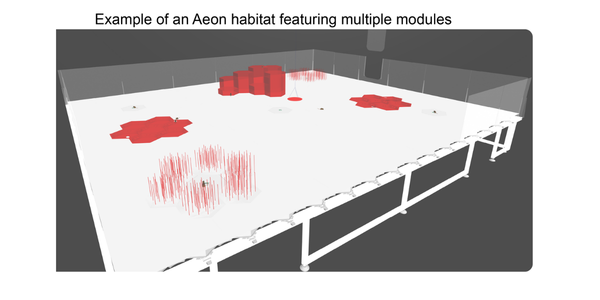
The Aeon platform is fully modular across its entire stack, including hardware modules, Bonsai acquisition software module, and the python-based data analysis pipeline. This provides exceptional flexibility for designing and implementing experiments and it has been used around the world to support experiments from head-fixed virtual reality to multi-weeks odour learning in freely behaving mice. A wide range of Aeon-compatible modules has already been developed within the core Aeon project and across the wider Aeon ecosystem. These include modules for acquiring and logging data in standardized data formats, controlling specific devices such as cameras, RFID readers, or Neuropixels probes, studying specific ethologically relevant behaviours, such as foraging and escape, as well as modules for auditory and visual stimulus presentation and for constructing complex environmental layouts. Additional modules, such as an olfactometer for odour discrimination tasks, further extend the platform's capabilities. Below, we show a subset of the existing Aeon modules together with an example of an experimental habitat designed using them.