
Abstract
Plasticity in the cortex is usually studied one rule at a time, each in its own paradigm. Yet from a single neuron to a cortical network to the human brain, computation and plasticity are built from coupled components: multiple signals share the same physical substrate, constraining and shaping each other. In this talk, I will describe what the coupling between these processes reveals about how brain networks compute and learn.
At the level of single neurons, we have shown that mitral cells in the olfactory bulb carry several computations within a single spike train, with dendrodendritic interactions gating dynamic effective connectivity. At the network level, recordings from the mouse piriform cortex reveal that the population code continually reorganises across wake and sleep along dissociable axes. During sleep, we find the first evidence of sequence-like replay of odour experience, accompanied by locally generated sharp waves. The wake and sleep contributions are separable within the same population, showing that offline reorganisation reshapes the code rather than merely extending what wake began.
To ask whether the same principles govern the human cortex, I established a platform for single-neuron recording in the living human brain, including the first human Neuropixels recordings in Europe. With multiple surgical corridors, now we can test the coupling of computation and plasticity directly in people, in the same cortical processes we dissect in mice.
Together, these findings argue that cortical computation and learning result from coupled processes: local plasticity, recurrent dynamics, inhibitory regulation, and offline consolidation. For the first time, these signals can be separated and perturbed in the same network in mouse and human. How they combine, compete, and complement one another is now an experimental question, not only a theoretical one.
Biography
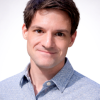
Mihaly Kollo earned his medical degree at the Semmelweis University in Budapest in 2004. He earned his doctorate in neuroscience in 2009 from Zoltan Nusser’s laboratory, where he studied the cellular anatomy and physiology of voltage-gated ion channels.
After postdoctoral training at the Max Planck Institute for Medical Research in Heidelberg, with Winfried Denk and Andreas Schefer, where he studied olfactory processing during behaviour, he moved to London, to the National Institute for Medical Research, to lead a neurotechnology team developing bidirectional large-scale single-unit recordings.
In 2016, he joined the Francis Crick Institute, where he is now a Principal Laboratory Research Scientist, leading neurophysiology at Andreas Schaefer’s laboratory. His work spans the single-neuron computations of olfactory mitral cells, the active sensing and sniff dynamics that shape odour representations, the molecular and spatial organisation of the olfactory system, and the representational drift and replay that reorganise cortical codes across sleep, combining in vivo electrophysiology, behaviour, spatial transcriptomics, large-scale neurotechnology, and machine learning across both rodents and humans.
Most recently, he has built a platform for intra-surgical high-density single-neuron recordings in the human brain, achieving the first human Neuropixels recordings in Europe, and is now developing it as a shared resource for studying the physiology of the human cortex at cellular resolution.