

Abstract
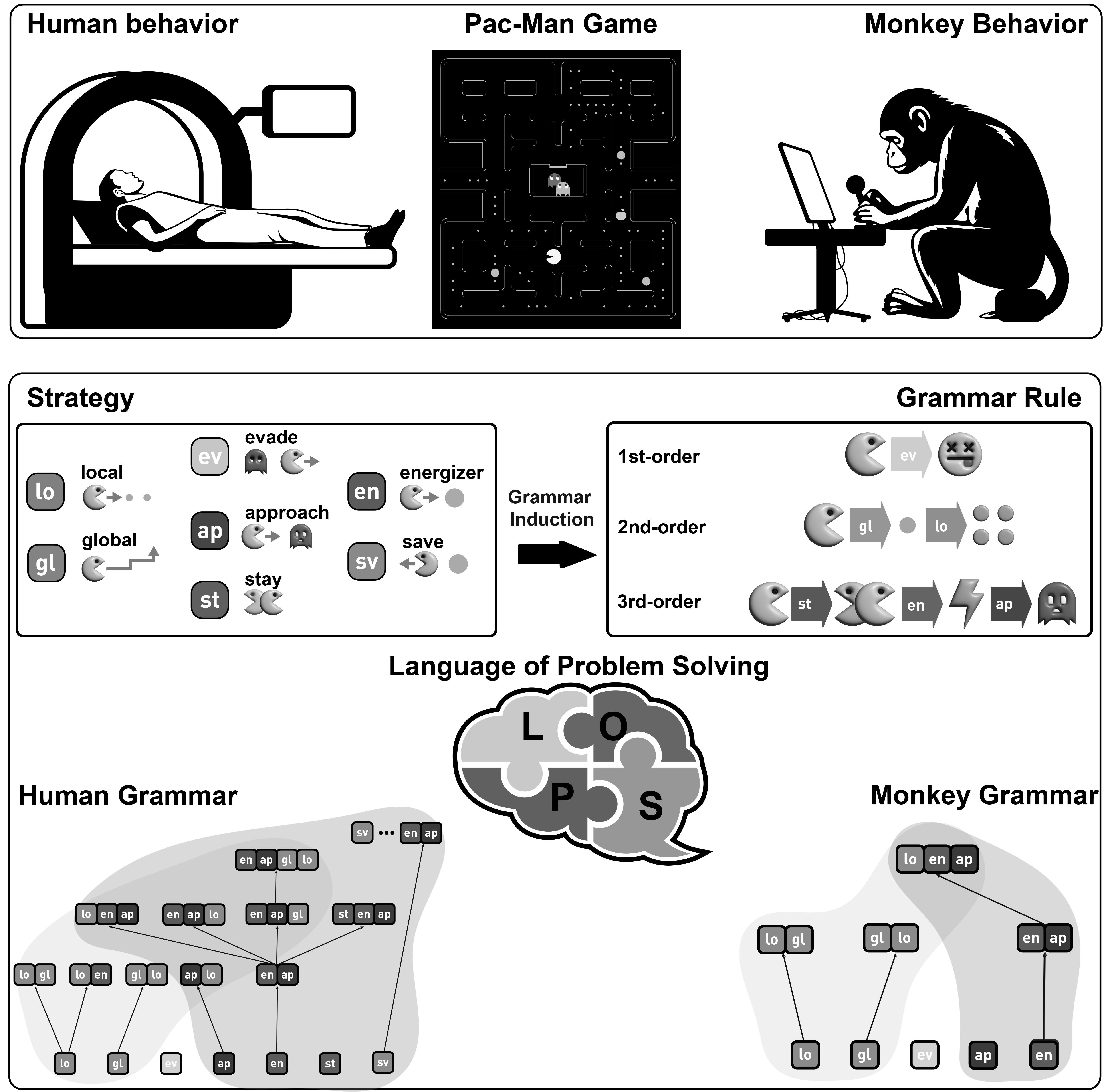
What can a retro arcade game tell us about the architecture of the human brain? Traditional neuroscience often views decision-making as a series of isolated choices, but in this talk, I propose a shift in perspective. Using Pac-Man, we investigate problem-solving as a structured, hierarchical process. Our analysis of human and macaque gameplay reveals that both species "speak" a language of problem-solving, though with a divergence in complexity. Monkeys utilize simple grammar structures, whereas expert humans deploy complex "sentences" to navigate dynamic environments. Using fMRI, we map this ability to a right-lateralized network that strikingly mirrors the left hemisphere’s language centers. This suggests the brain encodes strategic grammar using the same computational principles found in language. By leveraging complex environments like Pac-Man, we can go beyond standard models of decision-making to reveal how the brain organizes behaviour at a higher, more abstract level.
Biography
Tianming Yang, Ph.D., is Senior Investigator at the Center for Excellence in Brain Science and Intelligence Technology (Institute of Neuroscience), Shanghai, Chinese Academy of Sciences, where he has been conducting research on how neural circuits support complex decision making and cognition since 2013; he earned his Ph.D. in Neuroscience from Baylor College of Medicine under Dr. John H. R. Maunsell, and has held research positions as a staff scientist at the National Institute of Mental Health (2008–2013) under Dr. Elisabeth A. Murray, following his postdoctoral study at the University of Washington and Howard Hughes Medical Institute (2003–2008) with Dr. Michael N. Shadlen.