
Abstract
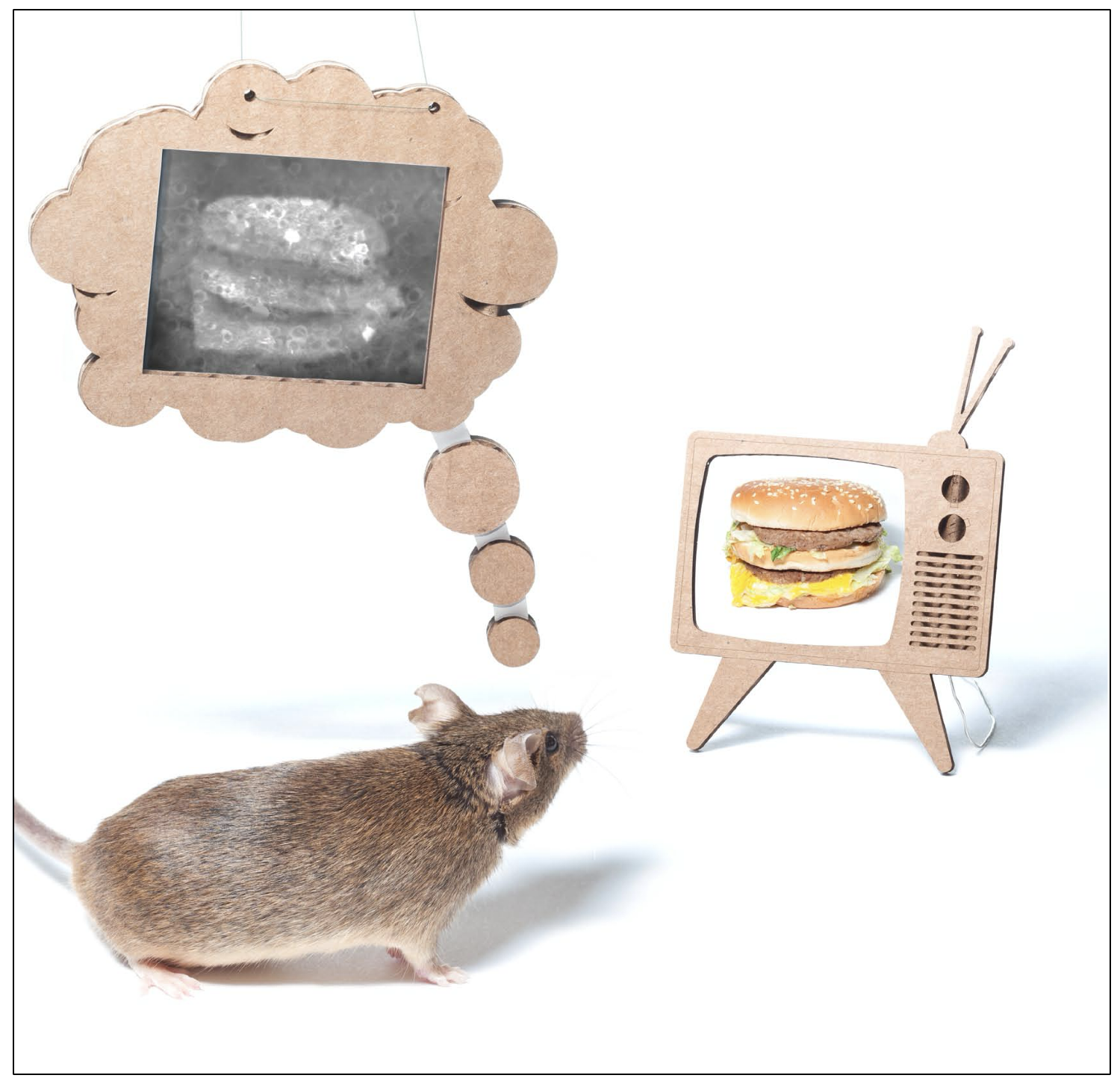
Causal evidence suggests that despite constituting a small proportion of time in an animal’s life, brain-wide events surrounding hippocampal sharp-wave ripples play an outsized role in supporting memory consolidation. However, the mechanisms by which offline ripple-associated reactivation of recent experiences contributes to learning and memory are unclear. Psychologists have long appreciated that memory consolidation is an active rather than passive process; new experiences are not copied onto a blank slate, but are instead integrated with learned priors. Accordingly, we and others have shown that reactivated patterns of neural activity are not carbon copies of activity patterns evoked by prior experience, but instead predict and possibly guide future changes in sensory responses, thereby reorganizing and optimizing neural representations. During spontaneous activity in quiet waking prior to any visual stimulation, ripple-coupled cortical neurons differentially participate in spatially structured ensemble events, co-firing with other cells that share retinotopic tuning within and across visual areas. Further, consistent with a role for intracortical inputs in driving the activity of ripple-coupled cells, these cells were more tuned to “inverse” stimuli, an emergent form of tuning driven by intracortical feedback. Taken together, our data suggest the existence of a ripple-coupled cortical network with strong sensitivity to recurrent inputs that may guide the integration of new experiences into pre-existing neural schema. Ongoing efforts aligning imaging data with post hoc spatial transcriptomics are examining potential mechanisms facilitating the expression of this ripple-coupled cortical network during quiet waking.
Biography
Mark Andermann graduated from McGill University in 1999 with a joint honors degree in mathematics and physics, and received his Ph.D. in biophysics and neuroscience in 2005 from Harvard University. After training in human neuroimaging and psychophysics in Helsinki, Finland, Dr. Andermann completed his postdoctoral training with Dr. Clay Reid at Harvard Medical School, where he developed new tools for studying the neural basis of visual perception and attention, by tracking neural activity in the same individual brain cells across months in behaving mice. In 2012, Mark opened his laboratory in the Division of Endocrinology, Diabetes, and Metabolism at Beth Israel Deaconess Medical Center. Mark is currently a Professor of Medicine and Neurobiology at Harvard Medical School. His lab has sought to understand how the needs of the body bias learning, attention, and offline sensory processing towards need-relevant objects. To achieve these goals, the lab employs cellular and subcellular imaging of brain cells in retina, thalamus, cortex, amygdala, hypothalamus, brainstem and choroid plexus across weeks as mice seek food, water, mates, or safety. This work has been supported, in part, by a Pew Scholars Award in the Biomedical Sciences, a Smith Family Foundation Award for Excellence in Medical Research, a McKnight Scholar Award, and by a Director’s New Innovator Award, a Pioneer Award and a Catalyst Award from the National Institutes of Health.