Why do people put their trust in science?
19 November 2026
Trust in science may not be something we think about very often. Yet it is something we regularly do. We rely on scientific understanding and advances every day - we accept that our fridge, phone or the train we are about to board, most of the time, just work.
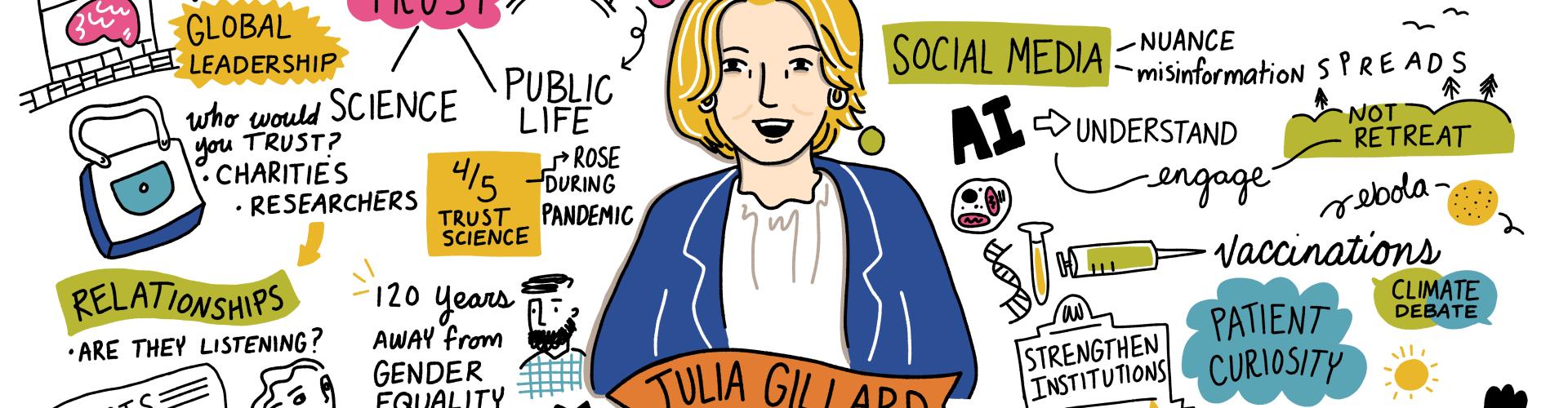
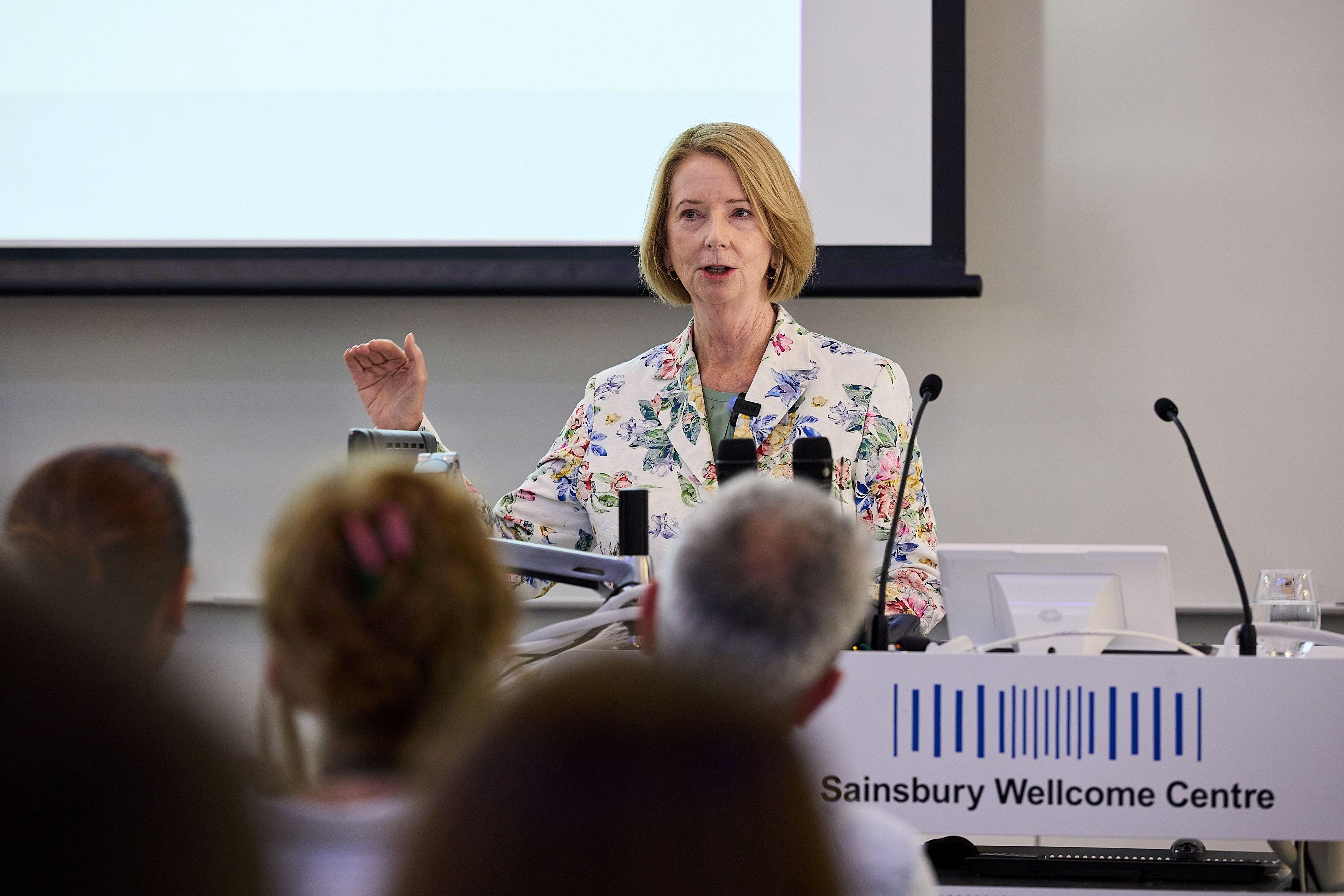
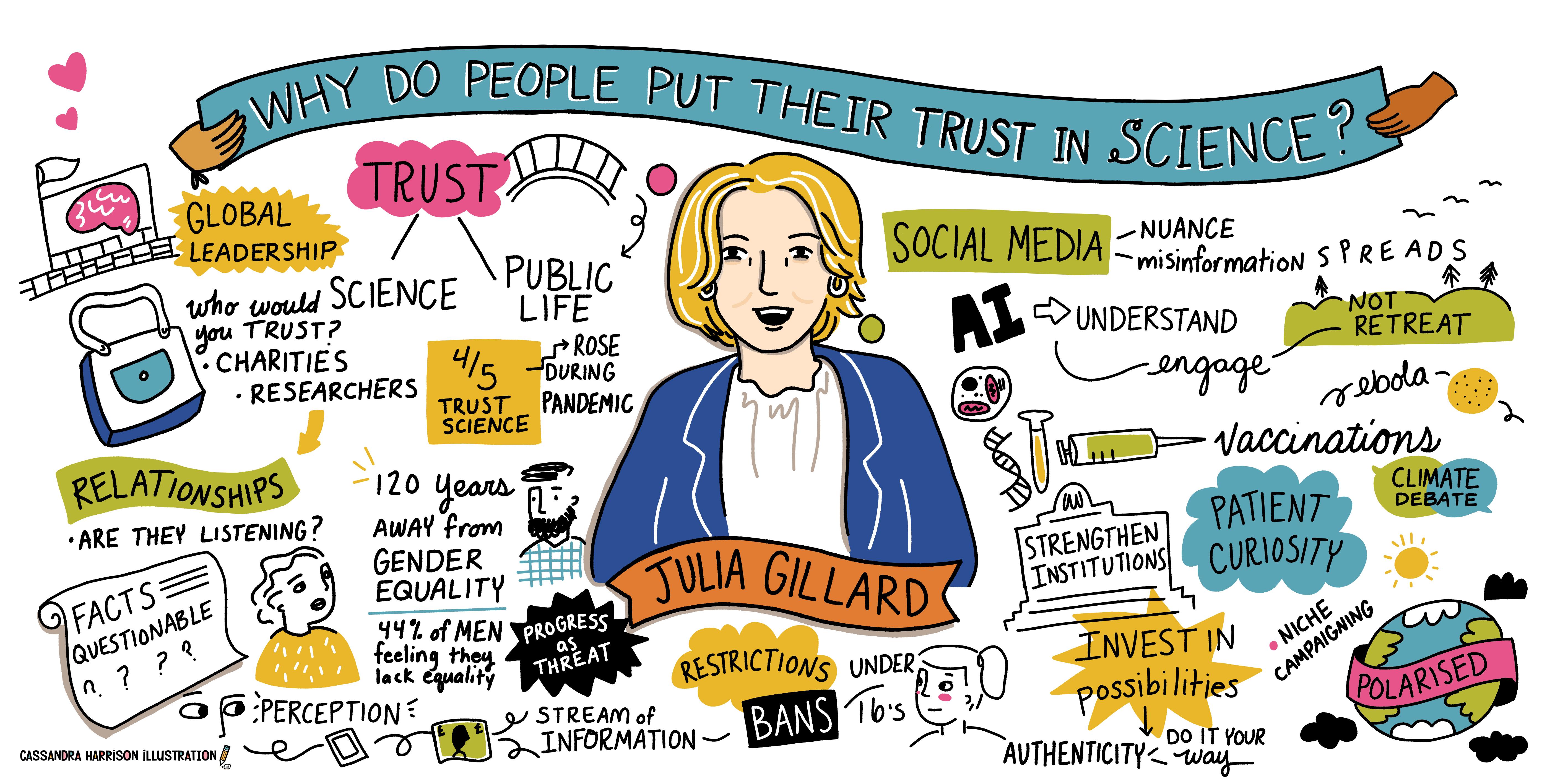
At this year's SWC Lecture, Julia Gillard AC, former Prime Minister of Australia and Chair of Wellcome, explored the issues underlying trust in science. She described trust as the bridge that spans between what a few people know and what society can use – and something that it is vital to maintain.
She spoke about Wellcome’s work, which shows that four out of five Britons say they trust science to some degree. But dig deeper, and the picture is complex. Trust in science is changing, and many more people’s trust in science is guarded. Trust varies across society, and when the boundary between politics and science becomes blurred, then trust is harder to maintain.
She also touched on social media – one way that many people interact with science. There, in the battle for our attention, it’s the short, emphatic, and often monetised headlines that will win over the cautious language and incremental progress of research. She noted it’s not just about the message, though, but the messenger. Who do we trust? An influencer, a friend? A voice that reinforces our beliefs?
We sat down with Julia to ask what drew her to the topic, how trust in politics compares with trust in science, and what researchers and institutions can do to build and protect it.
What brought you to this topic for the lecture?
From my life as a politician, I've always understood how central trust is to enabling communities to embrace change. If you lose trust in politics, in institutions, then you get communities that are very discontented, very change-resistant. Having spent now five years in the role as Chair of the Board of Wellcome, what is apparent to all of us at Wellcome is that the question of trust in science is now a global one. At its most extreme in some parts of the world, we can see it very much fused with contemporary politics. But the question of trust in science is everywhere. So we've been interrogating: what are trust levels now, what helps earn trust? I think it's really important to share that with the scientific community and with the broad community that cares about science because it's an issue for all of us.
What's the main thing you'd like people to understand about trust in science?
I think the main thing is to get a sense that trust, particularly currently in the UK, is still high, but there is some fragility around it.
Answering the trust questions is not so much about technical explanations of scientific rigour, the way one scientist would talk to another scientist about their experiments. But really bolstering trust is about who is doing science, why they're doing it and how it relates to the public good.
So, the message I'd like to leave and have resonate with people is how thoughtful and transparent we've got to be to keep nurturing public trust.
You've had to earn trust as a political leader. And now you're asking people to trust institutions that fund science. Are those the same kind of trust or do you feel they're fundamentally different?
I think they're a bit the same and a bit different. I mean a bit different because, thankfully, science and scientific funding start at a higher level of trust than politicians. I joke in the speech that when you look at who's trustworthy in the UK now, people put scientists near the top, and politicians near the bottom. So I've kind of jumped category by joining Wellcome, which has been good for me. So we're starting in a different place. Clearly, there's not the partisanship which inherently comes with politics and can disincentivise trust.
But there are things that are the same. You garner trust by reaching out to people, talking to people, meeting them where they are. By addressing any fears and concerns, being transparent. And I think they're probably good rules of the road for politics as well as for science.
What would you say to a research institution or an individual scientist about earning trust? Where should they focus their efforts?
People become scientists because they're intrigued by the wonder and genius of science, and they want to contribute by creating new knowledge. That's absolutely what we want people to be doing, but in today's world we can't do that in a context where we think once it's done, the science will speak for itself.
I think every researcher has to recognise that there's an obligation to speak for the science and, as a design question, as they're planning their scientific work, think about how they're going to do that outreach, whether it's at a whole centre level or an individual research team level or even the level of an individual scientist.
When trust in science takes a hit, that might be a retracted study, a change in guidance or a controversy, what do you think determines whether the public bounces back quickly or might stay sceptical for longer?
I don't think research-wise we entirely know the answer to those questions yet. But intuitively I think if an error has been made, the only way of regaining trust is to be very upfront about it. I mean, we know this from ordinary human relationships and friendships and relationships built on trust. If there's something that has given trust a knock in those relationships, you only really get over it and get through it by being transparent about the problem, talking it through and then jointly finding the solution. So I think that's the same.
From your current role at Wellcome, is there anything you've learned about building trust that has surprised you?
I came to Wellcome as the COVID-19 pandemic was still in progress, but the end was in sight. I started in April 2021, so the vaccines had become available and you could see the return to normality in the future.
If you'd asked me to predict it then, I would have said the whole experience of the pandemic would have greatly increased trust in science because we had a huge global crisis and science found the way to get us out of it – and there was actually a rise overall. But as we saw with vaccine hesitancy and vaccine refusal and how much of that became fused into politics, it wasn’t all clear cut.
In the Wellcome role, I’ve had to address and think through a series of things that hadn't really presented in my political career.
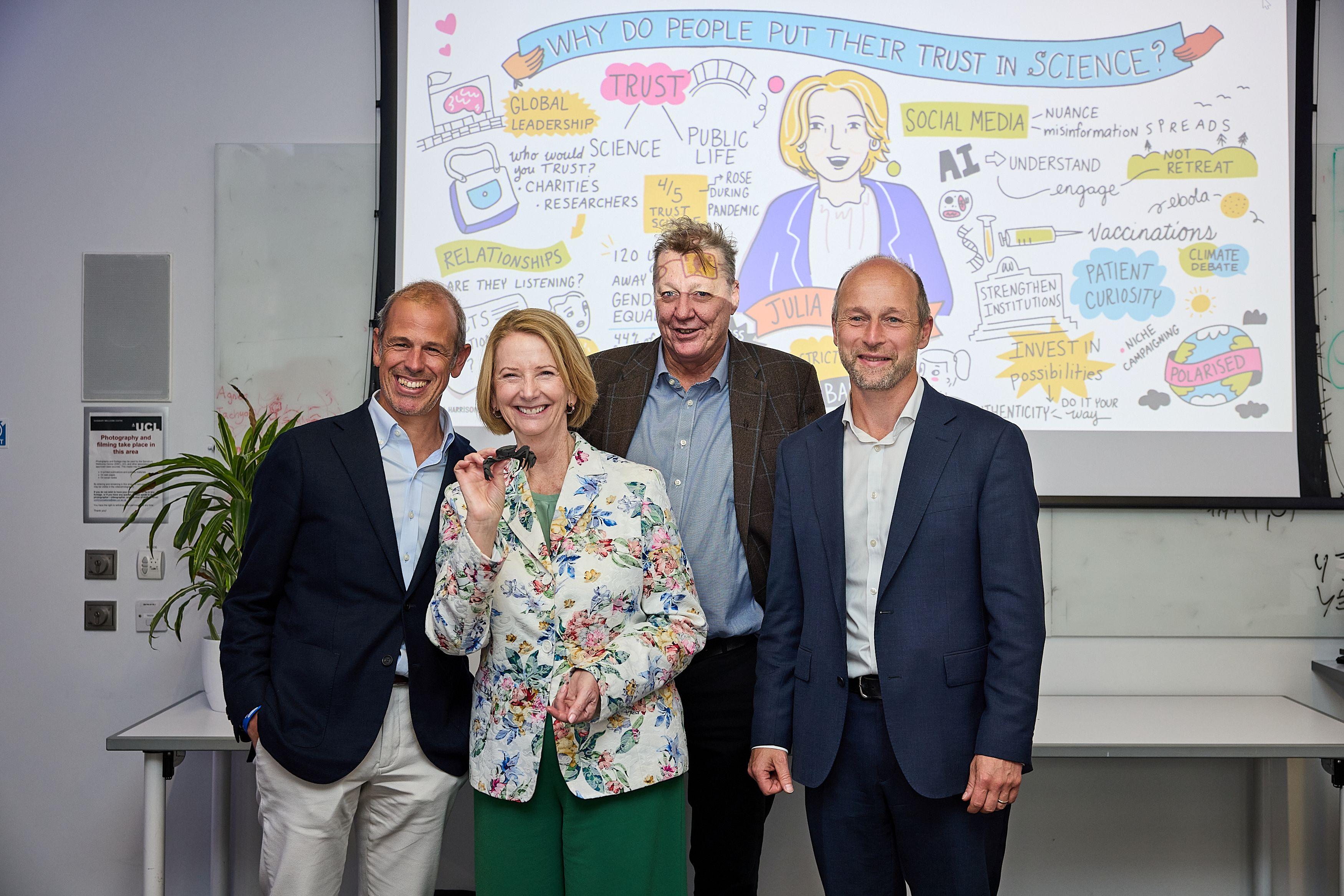
You're speaking about trust at the Sainsbury Wellcome Centre, a place that studies how the brain makes decisions. Does that context shape how you think about trust?
Well, it shapes my intrigue about what all of the research here will ultimately enable us to understand about brains, neuroscience and implications for being human. Including, I'm sure across many years of research, how behavioural responses get formed. So maybe this centre is actually going to solve these problems for us. That'd be nice.
Find out more
Wellcome - Earning public trust in science
The SWC Lecture - watch previous SWC public lectures
Photos - Credit: Sainsbury Wellcome Centre / Lucy Pope
Illustration - Credit: Cassandra Harrison