Home
Sainsbury Wellcome Centre for Neural Circuits and Behaviour

Main navigation

  • Our research
    • Overview
    • Research Culture
    • Research Areas
    • Research Groups
    • Facilities & Platforms
    • Tools & Software
    • Latest Discoveries
    • Animal Research
  • Study & Work
    • Why Join SWC?
    • PhD Programme
    • Postdoctoral Fellowships
    • Professional & Scientific Staff
    • How to Apply
    • All Vacancies
  • Sharing our science
    • News Releases
    • BrainGlobe Initiative
    • Newsletter
    • Blog
    • Public Engagement
    • Resources for Teachers
    • Exhibitions
    • Media & Press
    • Innovation
  • What's On
    • Seminars & Talks
    • Courses
    • ENSS
    • Public Events
  • Our People
    • Group Leaders
    • Researchers
    • Professional & Scientific Staff
    • PhD Students
    • Executive Team
    • Affiliates
    • Alumni
  • About SWC
    • Our Vision
    • Funders & Governance
    • Gatsby Unit
    • Our Building
    • EDI at SWC
    • Intranet
    • Contact Us

Main navigation mobile

  • Our research
    • Overview
    • Research Culture
    • Research Areas
    • Research Groups
    • Facilities & Platforms
    • Tools & Software
    • Latest Discoveries
    • Animal Research
  • Study & Work
    • Why Join SWC?
    • PhD Programme
    • Postdoctoral Fellowships
    • Professional & Scientific Staff
    • How to Apply
    • All Vacancies
  • Sharing our science
    • News Releases
    • BrainGlobe Initiative
    • Newsletter
    • Blog
    • Public Engagement
    • Resources for Teachers
    • Exhibitions
    • Media & Press
    • Innovation
  • What's On
    • Seminars & Talks
    • Courses
    • ENSS
    • Public Events
  • Our People
    • Group Leaders
    • Researchers
    • Professional & Scientific Staff
    • PhD Students
    • Executive Team
    • Affiliates
    • Alumni
  • About SWC
    • Our Vision
    • Funders & Governance
    • Gatsby Unit
    • Our Building
    • EDI at SWC
    • Intranet
    • Contact Us

Blog

Breadcrumb

  1. Sharing our science
  2. Blog
  3. Blog
Blog

Finding patterns in the noise

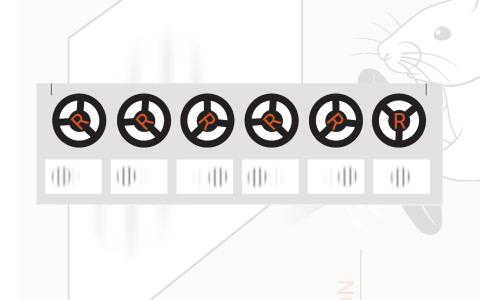
A new preprint from the Akrami lab at the Sainsbury Wellcome Centre shows that mice, like humans, can quickly learn patterns in sounds, including frequency and abstract rules, simply from experience, without instruction or reward. Their work demonstrates that the hippocampus performs this function of true unsupervised statistical learning, by dynamically reorganising its activity in separate subspaces, offering new insight into one of the brain’s core computational abilities.

17 February 2026
Q&A

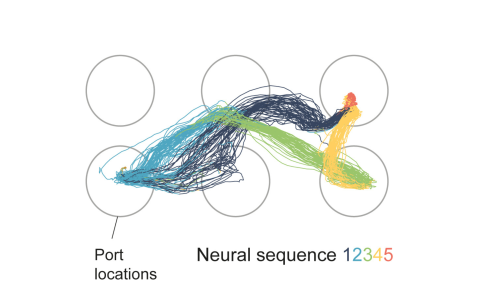
Solving new problems

Dr Saurabh Vyas, based at Carnegie Mellon University, is developing sophisticated behavioural tasks that enable the interpretation of neural activity during unique, one-off cognitive events, when a subject sees, does, or figures out something for the very first time. As a winner of the Emerging Neuroscientists Seminar Series 2025, Dr Vyas recently spoke at SWC. In this Q&A, he introduces his work and shares his excitement about the new capabilities of neuroscience.

25 February 2026
geometric shapes
Blog

The language of geometry

Human cognitive abilities differ from those of other species, but finding clear, observable markers of the gap remains challenging. One domain where this difference becomes visible is our capacity to recognise 2D shapes. While many animals can recognise flat depictions of objects, being able to distinguish plain old squares, rectangles, and triangles seems to be an innate, and uniquely human, ability. Researchers are now investigating the neural mechanisms that make this skill possible.

23 February 2026
SWC Speaker Series graphic with fruit fly neurons labelled in green
Blog

What fruit flies are teaching us about the need for sleep

The longer we stay awake, the stronger the homeostatic pressure to sleep becomes. But what are the precise signals of this need inside the brain, and how does that signal translate into the neural activity that drives rest? Recent studies using fruit flies, undertaken by University of Oxford researchers Dr Raffaele Sarnataro & Dr Peter S. Hasenhuetl, are providing new insights into how sleep is controlled. As two winners of the Emerging Neuroscientist Seminar Series 2025, they recently spoke at SWC about their work. In this article, they introduce their findings on how cellular energy balance and network-level oscillations can regulate sleep. 

11 February 2026
Blog

Under pressure: Does everyday stress affect financial decisions?

Many of the negative effects of prolonged stress are well-known. In the brain, chronic stress reduces our ability to think. It makes solving problems, as well as regulating our behaviour, harder. But when it comes to the effects of stress on making decisions, especially choices that pit instant gratification against delayed reward, the picture is less clear. Dr Jeffrey Erlich from the SWC has published new research indicating that stress does play a role in the willingness to wait.

16 January 2026
Blog

Home sweet home: Automating novel object recognition

Researchers at the UK Dementia Research Institute, the University of Cambridge and the Sainsbury Wellcome Centre have developed and validated a fully automated novel object recognition test that runs entirely in a mouse’s home cage. By removing many sources of variability, the setup allows for more reliable measurements of memory, including long-term retention.

15 January 2026
Q&A

Inside the social brain: What mice teach us about learning from others

Dr Dimokratis Karamanlis at the University of Geneva is exploring social decision-making in mice. Using a task in which two mice make visual decisions side-by-side, he has shown that mice reliably copy a partner’s choice when their own visual cues are hard to interpret. Brain-wide analysis of neural activity shows that the medial prefrontal cortex becomes more active during these social decisions and plays a key role in this computation. As a winner of the SWC Emerging Neuroscientist Seminar Series 2025, Dr Karamanlis recently spoke at the SWC about his research. In this Q&A we discuss his latest findings.

17 December 2025
Blog

From value to movement: Scientists uncover the circuit mechanism linking decisions to actions

A new preprint from the Sainsbury Wellcome Centre (SWC) shows that the anterior lateral motor cortex (ALM), a region previously linked mainly to movement, also represents the value of competing options before converting a choice into action. The study bridges a major gap in our understanding of how abstract, value-based decisions are computed and then transformed into physical behaviour.

15 December 2025
Q&A

Decoding emotion

Professor Daniel Salzman is known for his research on how the brain represents emotions, values, and internal states. Based at Columbia University, Professor Salzman recently spoke at SWC about some of his recent research in the basolateral amygdala (BLA). His findings show that the brain can extract multiple, independent emotional signals from ensembles of neurons that individually respond to many different variables.

12 December 2025
Blog

New findings rewrite understanding of short-term memory

New research from Dr Jeffrey Erlich and Dr Jingjie Li at the Sainsbury Wellcome Centre shows that the rodent brain stores short-term information in the most computationally efficient way.

1 December 2025
Q&A

Balancing the brain: GABA receptors in mood and cognition

In patients with anxiety, depression, and other mood disorders, GABA signalling is often disrupted. Dr Elif Engin, Assistant Professor of Psychiatry and Associate Neuroscientist at Harvard University, studies GABA-A receptors to understand the neural mechanisms underlying these conditions. In this Q&A, she discusses her work on specific GABA-A receptor subtypes, particularly those containing the α5 subunit, and their potential role in memory and learning.

19 November 2025
Graphic illustration depicting decisions
Blog

How does music impact the brain? Neuroscientists explain

We asked leading neuroscientists and previous SWC speakers, ‘What impact does music have on the brain?’. In this article, they reflect on its role in bonding social groups, its influence on our emotions and its potential as therapy for neurodegenerative disorders.

28 October 2025

Pagination

  • Current page 1
  • Page 2
  • Page 3
  • Page 4
  • Page 5
  • Page 6
  • Page 7
  • Page 8
  • Page 9
  • …
  • Next page Next
  • Last page Last

Connect with us

SWC blog

Stay up to date on the latest things happening at SWC.

Sign up to our newsletter

Join our mailing list to receive event updates and the SWC monthly newsletter

Contact us

25 Howland Street
London W1T 4JG
t: +44 20 3108 8000
e: swc-enquiries@ucl.ac.uk

Footer menu

  • Disclaimer
  • Freedom of Information
  • Accessibility
  • Privacy and Cookies
  • Slavery Statement
  • Sitemap
  • SWC Intranet
  • Contact us
Copyright © 2026 Sainsbury Wellcome Centre