
Abstract
Learning to read is a key stage in education that deeply changes children’s brain. Over the past twenty years, thanks to a series of behavioral and brain-imaging experiments, we have begun to understand how the brain acquires reading. Literacy “recycles” pre-existing neuronal circuits that evolved for face and object recognition and get repurposed for the fast, parallel recognition of letter strings. Recent computational modelling studies suggest a new hypothesis about the neural code for invariant recognition of written words: with training, neurons that we call “space bigrams” become tuned to a letter at a fixed approximate position relative to the beginning or the end of the word. I will present new brain-imaging data, as well as single-cell recordings in humans and even in monkeys, which supports the existence of such a neural code in the visual word form area of left ventral inferotemporal cortex. I will then describe how those findings shed new light on the various types of dyslexias and their diagnosis. I will end with a discussion of how our growing understanding of the science of learning can be applied in the classroom and support evidence-based education reforms.
Biography
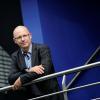
Professor Stanislas Dehaene holds the Chair of Experimental Cognitive Psychology at the Collège de France in Paris. He directs the NeuroSpin centre in Saclay, south of Paris -- France's advanced neuroimaging research centre.
Stanislas Dehaene’s research investigates the neural mechanisms of human cognitive functions such as reading, calculation and language, with a particular interest for the differences between conscious and non-conscious processing, and for the impact of education on the brain. His main research findings include the discovery of automatic links between numbers and space, and the central role of the intraparietal sulcus in number sense; the operation of the ''visual word form area'', a left occipito-temporal region that plays a central role in learning to read; and the identification of physiological responses unique to conscious processing, supporting the theory of a ''global neuronal workspace'' for consciousness.
Prof. Dehaene has received numerous awards and prizes. In 2014, he was awarded the Grete Lundbeck Brain Prize, a 1 million € award (with G. Rizzolatti and T. Robbins). He is a member of nine academies: the National Academy of Sciences USA, the Royal Society, the American Philosophical Society, the Pontifical Academy of Sciences, the French Académie des Sciences, the British Academy, Academia Europae, the Royal Academies for Science and the Arts of Belgium, and the European Molecular Biology Organization EMBO. In 2023, he received his third ERC advanced grant.
Prof. Dehaene is the author of several books for the general public, including The Number Sense, Reading in the Brain, Consciousness and the Brain, How We Learn and Seeing the mind, which were translated in more than fifteen languages. He has also created three television documentaries and authored more than 500 scientific publications in journals such as Science, Nature, Nature Neuroscience, and PNAS. 90 of his articles were cited more than 500 times.